We earn a commission if you buy through our links, at no extra cost to you.
Best Digital Piano for Advanced Players: Action and Sound
For intermediate, advanced and returning pianists: wood-hybrid and wooden-key actions, escapement, polyphony, pedals and USB recording, plus models that fit.
At a glance
Advanced players should weigh the key action, pedals and sound engine. The Roland FP-90X has a wood-hybrid PHA-50 action and a four-speaker system. The Yamaha P-525 has solid wooden keys, and the Yamaha Arius YDP-165 is a console with three pedals and half-pedaling.
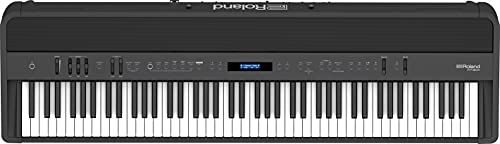
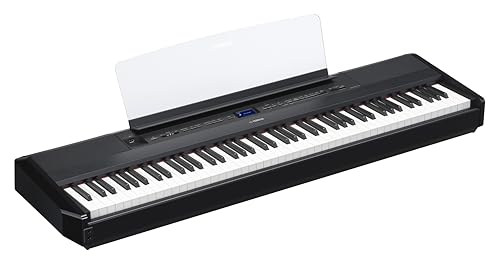
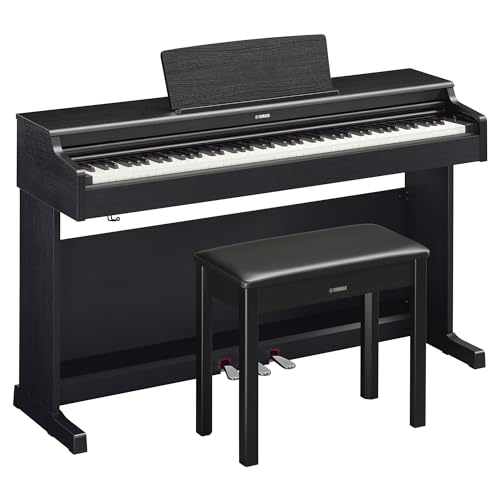
Once you can play, the question changes from “will this teach me” to “will this feel right when I play what I want to play.” That shifts attention to the key action, the quality of the sound, the pedals and what happens when you record yourself. This guide covers those points for intermediate and advanced players and for people returning to piano after years away. For the whole field, see our best digital pianos of 2026 comparison.
We write from the manufacturers’ published specifications and our own comparison of them, not from measurements of our own. Touch is personal, so use the specifications to narrow the list, then try the action if you can.
The Action: Hybrid, Wooden or Plastic
Roland PHA-50. Roland describes the PHA-50 in the FP-90X as a hybrid with wood sides and molded material, with escapement and ebony/ivory feel keytops. Roland says it is also found in its top-level home pianos.
Yamaha GrandTouch-S. Yamaha lists solid wooden keys on the P-525, white keys only, with escapement and synthetic ebony and ivory keytops. Yamaha says the same keyboard is used in its top Clavinova pianos.
PHA-4 Standard and GH3. The FP-60X, FP-30X and RP107 use Roland’s PHA-4 Standard, and the YDP-165 uses Yamaha’s GH3. These are graded hammer actions with synthetic keytops and, in Roland’s case, escapement. They are solid for practice, but if the action is your priority, look at the wood-based keyboards above.
The practical advice is simple. Try the touch with the dynamics and repertoire you play. Soft passages, repeated notes and fast scales show differences that a showroom chord does not.
Sound Engines and Polyphony
Sound modeling tries to reproduce how a piano’s strings, dampers and body interact. Roland’s Pure Acoustic Piano Modeling in the FP-90X and Yamaha’s Virtual Resonance Modeling and Grand Expression Modeling in the P-525 both aim at that. Each company describes its approach, so compare their claims with what you hear.
Polyphony matters when you hold the damper pedal. Roland lists limitless polyphony for piano tones on the FP-90X and 256 for other tones. Yamaha lists 256 for the P-525 and 192 for the YDP-165. Dense, pedaled writing is less likely to drop notes on a 256-note engine.
Headphone sound. Roland describes headphone modes on its pianos, and Yamaha describes binaural sampling for the “CFX Grand” voice on the P-525. If you practice at night, that is worth checking on whichever model you shortlist.
Pedals and Half-Pedaling
Half-pedaling lets you lift the dampers only partway, which changes how notes blend and fade. It needs a pedal that detects continuous movement, and not every pedal in the box does.
- FP-90X: Roland lists damper, sostenuto and soft pedal jacks, a DP-10 damper pedal capable of continuous detection, and the KPD-90 three-pedal board as an option.
- P-525: Yamaha includes the FC3A sustain pedal compatible with half-pedaling, and lists the LP-1 or FC35 three-pedal unit as options.
- YDP-165: three pedals are built in, and Yamaha lists a half-pedal function on the damper.
If you play pieces with sostenuto or soft pedal markings, plan for a three-pedal setup. A console gives you that without extra purchases.
Recording and Computers
If you record yourself, USB matters. Roland lists USB audio/MIDI on the FP-90X, which also has a recorder that stores up to 80 minutes per audio song, according to Roland. Yamaha lists a USB audio interface on the P-525 at 44.1 kHz, 16-bit stereo, plus audio recording to a USB flash drive of up to 80 minutes per song. For a piano you plan to connect to a computer, check the cable type, because the P-525 uses USB Type C for the computer port.
Yamaha’s page for the YDP-165 gives no connection list in its specifications, so check the ports on Yamaha’s page before ordering if recording matters.
Setup Details That Affect Serious Practice
A stable stand matters more as the repertoire gets louder and faster, because a wobbling frame ruins repeated-note passages. Roland sells the KSC-90 stand for the FP-90X and Yamaha sells the L-515 for the P-525, and both are optional. Set the bench height so your forearms sit roughly level with the keys, and check that your foot reaches the damper pedal without lifting your thigh. If you share walls with neighbors, headphones keep long sessions from becoming a problem, and a mat under the pedals stops thumps from carrying through the floor.
Roland FP-90X: Wood-Hybrid Action and a Big Speaker System
PHA-50 wood-hybrid keys with escapement, Pure Acoustic Piano Modeling and a four-speaker system in a portable body.
Roland calls the FP-90X the top of the FP-X series. It lists two 25 W main speakers and two 5 W tweeters, Bluetooth audio and MIDI, USB audio/MIDI and a mic input. It weighs 52 lb 1 oz (23.6 kg) with the music rest, and with the optional KSC-90 stand and KPD-90 pedal unit it is 83 lb 6 oz (37.8 kg). See the FP-90X profile for the full specifications.
Yamaha P-525: Wooden Keys and Two Concert Grands
GrandTouch-S wooden keys, Yamaha CFX and Bösendorfer Imperial voices, and a USB audio interface for recording.
The P-525 is the flagship of Yamaha’s P Series, according to Yamaha. At 48 lb 8 oz (22.0 kg) it is heavier than the compact P-series models and lighter than a console. The included FC3A pedal supports half-pedaling, but a full three-pedal setup needs the LP-1 or FC35 and the L-515 stand. Our P-525 profile has more.
Yamaha Arius YDP-165: A Console With Three Pedals
A furniture-style piano with three built-in pedals, half-pedaling on the damper and Yamaha CFX sampling.
The YDP-165 uses the GH3 keyboard, Yamaha CFX sampling and VRM Lite, according to Yamaha, with 192-note polyphony and 20 W x 2 amplifiers. At 92 lb 10 oz (42.0 kg) it stays where you put it, and Yamaha lists a depth of only 16-5/8 inches. It suits a player who wants a permanent home instrument with real pedals and does not need the most advanced key action. See the YDP-165 profile, and confirm whether a bench is included in your listing.
Other Models Worth a Look
The Roland FP-60X uses the PHA-4 Standard keyboard and adds more sounds, ambience effects and a 3D headphone feature. The Roland RP107 is a three-pedal console with the same keyboard. Both are a step down in action from the FP-90X and P-525, so consider them if the pedals or the budget matter more than a wood-based key structure.
Questions to Ask Before You Buy
- Is the action the priority? Compare the PHA-50 and GrandTouch-S side by side.
- Do you need three pedals? Plan for a pedal unit or choose a console.
- Will you record? Check the USB audio interface and cable type.
- Where will it live? A portable flagship needs a stand, and a console needs wall space.
- Will you practice at night? Check headphone modes and the number of jacks.
Bottom Line
Advanced players should choose on touch first, pedals second and sound third. The FP-90X and P-525 are the action-first picks, and the YDP-165 is the home console for pedal-heavy repertoire. For every model side by side, see our best digital pianos of 2026 comparison, or return to our adult beginner guide if you are advising a newer player.
Sources
Frequently asked questions
What is escapement, and do advanced players need it?
Escapement is a mechanism that gives a small notch or click when you press a key slowly, as on a grand piano. Roland lists it on the PHA-50 and PHA-4 Standard keyboards, and Yamaha lists it for the P-525's GrandTouch-S. It matters most for soft, controlled playing and repertoire that depends on it.
Is a wooden-key action better than a plastic one?
It depends on your hands. Wood and hybrid keys feel closer to an acoustic piano for some players, and plastic hammer actions can still be very good. Manufacturers describe the difference, but the right choice is the keyboard that feels best to you when you play.
Does polyphony matter for classical repertoire?
Yes, with a sustain pedal held. Each sounding note uses voices, and long pedaled passages can exceed a low limit. Roland lists limitless polyphony in piano mode for the FP-90X and 256 for other sounds, and Yamaha lists 256 for the P-525.
Do I need three pedals?
For much advanced repertoire, yes. Half-pedaling on the damper is a common technique, and the sostenuto and soft pedals appear in classical pieces. The YDP-165 has three pedals built in, and the FP-90X and P-525 use optional three-pedal units.
Can I record my playing to a computer?
Yes. Roland lists USB audio/MIDI on the FP-90X, and Yamaha lists a USB audio interface at 44.1 kHz, 16-bit stereo on the P-525. A USB cable lets you capture audio or MIDI in recording software.
Are digital pianos good for returning players?
They can be, especially in a home where an acoustic piano is not an option. A high-end action keeps touch close to what you remember, and headphone practice avoids disturbing others. A teacher or a visit to an acoustic piano can help you compare.