We earn a commission if you buy through our links, at no extra cost to you.
Comparison
Best Digital Pianos 2026: 9 Models Compared
We compared published specs for 9 digital pianos from Roland and Yamaha, from the wood-key FP-90X and P-525 to compact beginner models and home consoles.
B By the Best Digital Piano Guide editorial team ·Published
At a glance
For serious players, the Roland FP-90X leads with its wood-hybrid keys and four-speaker system, and the Yamaha P-525 answers with wooden keys and two grand voices. For a permanent home piano with built-in pedals, choose the Yamaha Arius YDP-165. Beginners on a budget can start with the Roland FP-10.
Nine pianos, two brands, and three very different shapes: slab portables you put on a stand or desk, furniture-style consoles with pedals built in, and compact starter models. This ranking rests on what Roland and Yamaha publish on their own U.S. pages, not on playing the instruments, and where a number comes from the maker, we say so. The ranking leads with the strongest instruments and moves down toward the simplest, so a first-time buyer should read the whole list rather than stopping at the top.
How We Chose and What Matters
Five things separate one digital piano from the next, and the table below follows them.
Key action. The keybed is the part you touch every second. Roland’s PHA-50 (wood and plastic hybrid), Yamaha’s GrandTouch-S (wooden keys) and the plastic PHA-4 Standard, GH3 and GHC actions all use graded hammer weighting, heavier in the bass. Escapement, the small notch some actions mimic from a grand, is listed by Roland for the PHA-50 and PHA-4 Standard and by Yamaha for GrandTouch-S.
Sound engine. Roland builds on SuperNATURAL Piano, and on Pure Acoustic Piano Modeling in the FP-90X. Yamaha samples its CFX concert grand and adds resonance modeling on most models.
Speakers and headphones. Speaker wattage tells you about room-filling ability, not quality. If you will mostly use headphones, count the jacks.
Pedals and format. A portable usually ships with one pedal. A console has three built in. Plan for a stand and a pedal unit when you shop a portable.
Connectivity. Bluetooth audio streams a lesson or backing track through the speakers. Bluetooth MIDI and USB connect learning apps such as the Roland Piano App and Yamaha’s Smart Pianist.
We rank by overall capability, with the top of the list going to the instruments with the most refined keyboards and sound systems, and we note who each one is really for. A higher rank is not a better first purchase: a beginner is often better served by a model further down.
Comparison Table
#
Model
Key action
Sound engine
Speakers (per maker)
Format and pedals
Bluetooth
Weight (per maker)
1
Roland FP-90X
PHA-50 hybrid, escapement
Pure Acoustic Piano Modeling
2 x 25 W + 2 x 5 W tweeters
Portable; stand and 3-pedal unit optional
Audio and MIDI
52 lb 1 oz
2
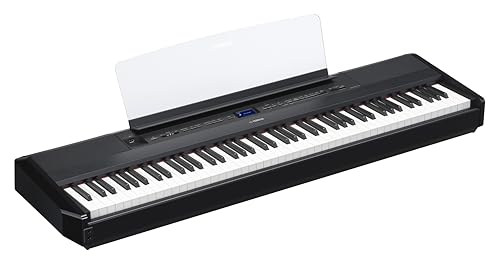
Yamaha P-525
GrandTouch-S wooden keys, escapement
Yamaha CFX + Bösendorfer Imperial, VRM
(20 W + 6 W) x 2
Portable; footswitch included, 3-pedal unit optional
Audio and MIDI (varies by area)
48 lb 8 oz
3
Yamaha Arius YDP-165
GH3
CFX sampling, VRM Lite
20 W x 2
Console; 3 pedals built in
Not listed
92 lb 10 oz
4
Roland FP-60X
PHA-4 Standard, escapement
SuperNATURAL Piano
13 W x 2
Portable; 3-pedal unit optional
Audio and MIDI
42 lb 9 oz
5
Roland RP107
PHA-4 Standard, escapement
SuperNATURAL Piano
8 W x 2
Console; 3 pedals built in
Audio and MIDI
82 lb
6
Roland FP-30X
PHA-4 Standard, escapement
SuperNATURAL Piano
11 W x 2
Portable; pedal switch included
Audio and MIDI
32 lb 11 oz
7
Yamaha P-225
GHC
CFX sampling, VRM Lite
7 W x 2
Portable; footswitch included, 3-pedal unit optional
Audio (varies by area)
25 lb 6 oz
8
Yamaha P-145BT
GHC
CFIIIS sampling
7 W x 2
Portable; footswitch included
Audio (varies by area)
24 lb 8 oz
9
Roland FP-10
PHA-4 Standard, escapement
SuperNATURAL Piano
6 W x 2
Portable; pedal switch included
MIDI only
27 lb 13 oz (rest detached)
Weights are as listed by Roland or Yamaha; the FP-60X, FP-30X and FP-90X figures include the music rest, as the makers state. Where a spec does not appear on a page we opened, we left it as “not listed” rather than guess.
1. Roland FP-90X — The Flagship With Wood in the Keys
The most complete portable here, for serious players who want a gig-capable instrument with the best action Roland puts in a slab piano. It is overkill for a first piano.
What we like
PHA-50 hybrid keyboard with wood sides, escapement and ebony/ivory-feel keytops, per Roland
Four-speaker system (2 x 25 W plus 2 x 5 W tweeters) that Roland says no other FP-X model matches
Bluetooth audio and MIDI, USB audio/MIDI, mic input and two headphone jacks
Drawbacks
At 52 lb 1 oz with the music rest, it is the heaviest portable in Roland's FP-X family
The stand and three-pedal unit are optional extras, so a furniture-style setup costs more
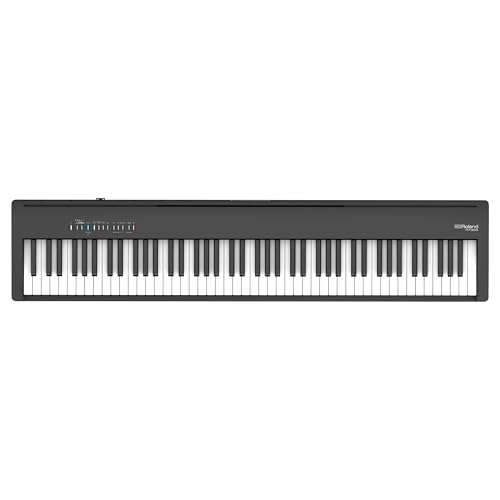
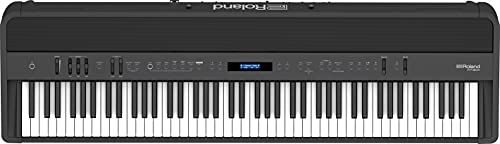
The FP-90X is where Roland puts its best piano technology in a slim cabinet. According to Roland, the PHA-50 keyboard combines wood and plastic in the key structure, adds escapement and uses ebony and ivory-feel keytops. The sound comes from Pure Acoustic Piano Modeling, which models how an acoustic grand makes its tone instead of only replaying a recording, and Roland lists eight piano variations plus a Piano Designer for adjusting things such as lid position and string resonance.
The speaker system is the other separator. Roland lists two 25 W speakers and two 5 W tweeters, and says no other FP-X piano matches its depth and dynamic range. Two headphone jacks, Bluetooth audio and MIDI, USB audio/MIDI and a mic input with vocal effects round it out. The trade-offs are weight, at 52 lb 1 oz with the music rest, and the fact that the stand and three-pedal unit are optional. If you are not sure you will keep playing, the Roland FP-60X is the lower-stakes step. Our full Roland FP-90X profile covers the details.
2. Yamaha P-525 — Wooden Keys and Two Grand Voices
Yamaha's flagship portable, with a wooden-key action and two grand voices. It suits serious players who want stage-ready sound and touch, and it is more piano than a newcomer needs.
What we like
GrandTouch-S wooden keys (white keys only) with escapement and synthetic ebony and ivory keytops, per Yamaha
Two concert grand voices, Yamaha CFX and Bösendorfer Imperial, with VRM and Grand Expression Modeling
256-note polyphony, Bluetooth audio and MIDI, and a USB audio interface
Drawbacks
The included pedal is a single footswitch; the LP-1 three-pedal unit and L-515 stand are sold separately
At 48 lb 8 oz it is much heavier than Yamaha's compact P-series models
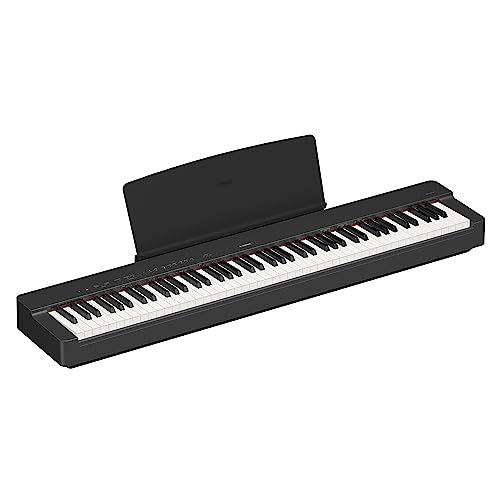
Yamaha calls the P-525 the flagship of its P Series. Its GrandTouch-S keyboard uses wooden keys (white keys only) with escapement and synthetic ebony and ivory keytops, the same keyboard family Yamaha uses in its top Clavinova pianos. The voices are the Yamaha CFX and the Bösendorfer Imperial, supported by Virtual Resonance Modeling and Grand Expression Modeling, with 256-note polyphony.
Yamaha lists a two-way speaker system rated at (20 W + 6 W) x 2, two headphone jacks, Bluetooth audio and MIDI (availability varies by area) and a USB audio interface for recording. At 48 lb 8 oz it is lighter than the FP-90X but far heavier than the compact P-series models, and the included pedal is a single footswitch, so budget for the LP-1 or FC35 if you need three pedals. Read the Yamaha P-525 profile for specifics. It sits one place behind the FP-90X in this ranking on speaker power and the breadth of the sound-shaping tools, not because of its keys.
3. Yamaha Arius YDP-165 — The Furniture Piano for a Permanent Spot
A traditional home piano for learners and families who want pedals and a stable cabinet in one piece. It is a poor fit for anyone who needs to move it.
What we like
Furniture-style console with three built-in pedals, including a damper pedal with half-pedal function
88-key Graded Hammer 3 (GH3) keyboard with synthetic ebony and ivory keytops, plus CFX sampling and VRM Lite
20 W x 2 speakers, a folding key cover and a library of lesson songs
Drawbacks
At 92 lb 10 oz it stays where you put it
Yamaha lists only 10 voices and 192-note polyphony, far fewer than the portable flagships
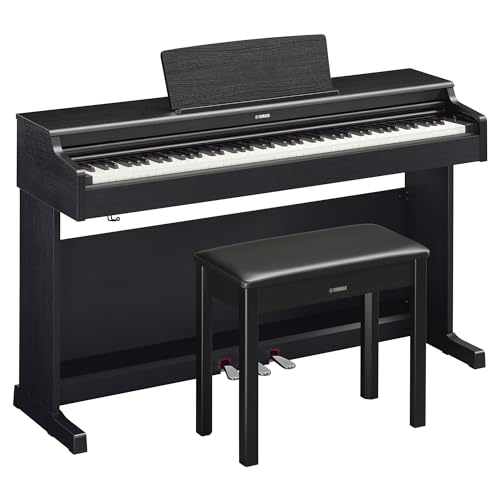
The YDP-165 is a console: keyboard, speakers and pedals in one cabinet. According to Yamaha, it has an 88-key GH3 keyboard with synthetic ebony and ivory keytops, CFX concert grand sampling with VRM Lite, 192-note polyphony, 10 voices and 20 W x 2 speakers. Three pedals are built in, including a damper pedal with a half-pedal function, which matters for intermediate repertoire and saves you from buying a separate unit.
Yamaha’s specification page lists a width of 53-7/16 inches and a depth of 16-5/8 inches, and a weight of 92 lb 10 oz (42.0 kg), so plan for two people and a fixed spot. Yamaha’s spec figures do not list connectivity, so confirm headphone jacks, USB and Bluetooth on Yamaha’s product page before buying. It is the best fit in this lineup for a family that wants an upright-style piano that stays put. See the Yamaha Arius YDP-165 profile for more.
4. Roland FP-60X — The Well-Rounded Middle Portable
A well-rounded middle portable for players who want more speaker power and sound variety than the entry models. Less compelling if you mainly want the best keys.
What we like
PHA-4 Standard keyboard with escapement and ivory-feel keytops, plus 256-note SuperNATURAL Piano polyphony
More sounds and effects than the lower FP-X models, including Headphones 3D Ambience and a mic input
Bluetooth audio and MIDI, USB audio/MIDI, two headphone jacks and 13 W x 2 speakers
Drawbacks
Speakers are well below the four-speaker system on the FP-90X
The keyboard is the same PHA-4 Standard as the cheaper FP-30X, so the step up buys sounds and speakers, not a better action
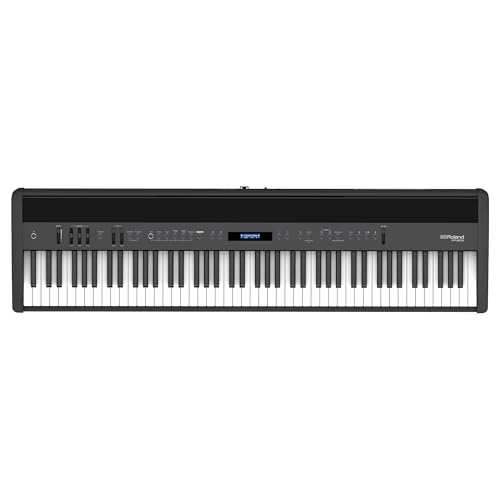
Roland positions the FP-60X as the upper-range choice for serious performance without the flagship’s cost. It uses the PHA-4 Standard keyboard with escapement and ivory-feel keytops and the SuperNATURAL Piano engine, with 256-note polyphony. Compared with the FP-30X, Roland lists more sounds, four ambience types, a mic input, Headphones 3D Ambience and 13 W x 2 speakers.
Bluetooth audio and MIDI, USB audio/MIDI and two headphone jacks come standard, and at 42 lb 9 oz with the music rest it sits between the compact models and the FP-90X. The catch is that the keyboard is the same as the FP-30X, so the upgrade buys features and volume rather than touch. Our Roland FP-60X profile walks through the comparison. If the piano will stay in one place, the next entry may suit you better.
An approachable, lesson-friendly home piano that borrows its keyboard and sound engine from higher-end Roland models. A strong fit for families and adult learners.
What we like
PHA-4 Standard keyboard with built-in damper, soft and sostenuto pedals
Bluetooth audio and MIDI, the Roland Piano App and 377 internal songs, including 287 lesson pieces
Slim cabinet with a sliding keyboard cover, dual headphone jacks and Twin Piano mode
Drawbacks
Speakers are rated at 8 W x 2, modest for a console
Only 15 tones are reachable from the front panel; the full 324 need the app
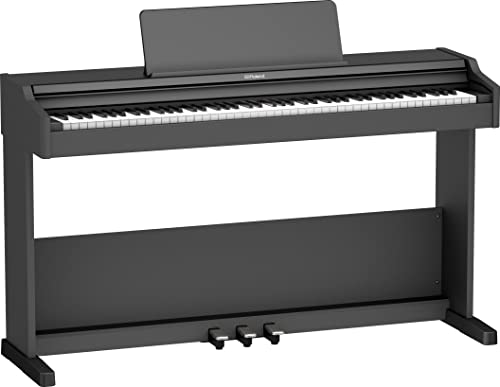
The RP107 packages Roland’s PHA-4 Standard keyboard and SuperNATURAL Piano into an upright-style cabinet with damper, soft and sostenuto pedals built in. Roland lists Bluetooth audio and MIDI, the Roland Piano App, 377 internal songs including 287 lesson pieces, dual headphone jacks and Twin Piano mode, which splits the keyboard so a teacher and student play the same range.
Speakers are rated at 8 W x 2, which is modest, and only 15 tones are reachable from the front panel without the app. Roland lists 82.0 lb (37.0 kg), about ten pounds lighter than the Yamaha YDP-165, and says two people can move it from room to room. It ranks below the YDP-165 on speaker power and keyboard refinement but above the FP-30X for buyers who want a console and three pedals out of the box. Read the Roland RP107 profile for the full spec rundown.
The mid-range pick of Roland's FP-X line, with the same key action as the model above it. A strong fit for beginners who want to keep learning and for returning players.
What we like
PHA-4 Standard keyboard with escapement and Ivory Feel, the same keyboard as the FP-60X
256-voice polyphony, 11 W x 2 speakers, Bluetooth audio and MIDI, and USB audio/MIDI
Two headphone jacks, twin piano mode and a desktop sound setting for apartment practice
Drawbacks
Only 56 of its 321 tones are selectable from the front panel; the rest need the Roland Piano App
A single damper pedal switch comes in the box, so a three-pedal unit and a stand are separate purchases
Roland calls the FP-30X the “sweet spot” of the FP-X line. It shares the PHA-4 Standard keyboard with the FP-60X and adds 256-voice polyphony, 11 W x 2 speakers, Bluetooth audio and MIDI, USB audio/MIDI, two headphone jacks, a twin piano mode and a desktop setting that adjusts the sound when the piano sits on a desk.
It weighs 32 lb 11 oz with the music rest, per Roland, and ships with a DP-2 pedal switch. The KSC-70 stand and KPD-70 three-pedal board are separate. Roland lists 321 tones, but only 56 are selectable from the front panel; the rest need the Roland Piano App. Our Roland FP-30X profile compares it with the P-225 and FP-10. It is the model we would look at first for a beginner who wants room to grow.
According to Yamaha, the P-225 pairs its new GHC keyboard with a sample of the CFX concert grand and VRM Lite resonance modeling. It lists 192-note polyphony, 24 voices, two headphone jacks, AUX out, Bluetooth audio (availability varies by country), a recorder and rhythms, with Smart Pianist app support. The speakers are rated at 7 W x 2, and the body is 52-3/16 inches wide, about 10-11/16 inches deep and 25 lb 6 oz.
The P-225 has matte plastic keytops and no escapement on its spec sheet, and it ships with a single footswitch; the LP-1 pedal unit and L-200 stand are optional. It ranks below the FP-30X because Roland lists a more refined key surface and more polyphony, but the Yamaha is lighter and many players prefer its grand sound. See the Yamaha P-225 profile for the comparison.
8. Yamaha P-145BT — The Simplest Weighted-Key Yamaha
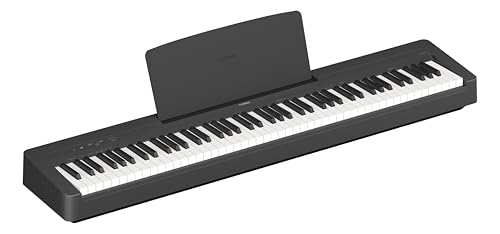
The P-145BT is the entry model in Yamaha’s P Series. It has 88 weighted, touch-sensitive GHC keys, Yamaha’s CFIIIS concert grand sound with damper resonance, Bluetooth audio for play-along practice and a metronome. Yamaha’s U.S. store page lists 24 lb 8 oz (11.1 kg), and the speakers are two 7 W units firing from the rear.
Polyphony is 64 notes and only 10 voices are listed, and there is one headphone jack, which matters if a teacher wants to listen. A footswitch, music rest and power adapter are in the box. If you want more voices, a recorder and a second headphone jack, the P-225 is the step up. Our Yamaha P-145BT profile covers the limits in detail.
9. Roland FP-10 — The Smallest Entry Point to a Real Roland Keybed
Roland's entry model, with a real piano touch in the smallest 88-key body in the family. A good fit for beginners and second-piano buyers who mostly use headphones.
What we like
PHA-4 Standard keyboard with escapement and Ivory Feel, in a compact body about 50-9/16 inches wide
SuperNATURAL Piano sound and twin piano mode
Bluetooth MIDI and USB for apps, plus a pedal switch and music rest in the box
Drawbacks
96-voice polyphony, 6 W x 2 speakers and a single headphone jack sit well below the FP-30X
Bluetooth is MIDI only, with no audio streaming, and Roland says it may not be included in every country
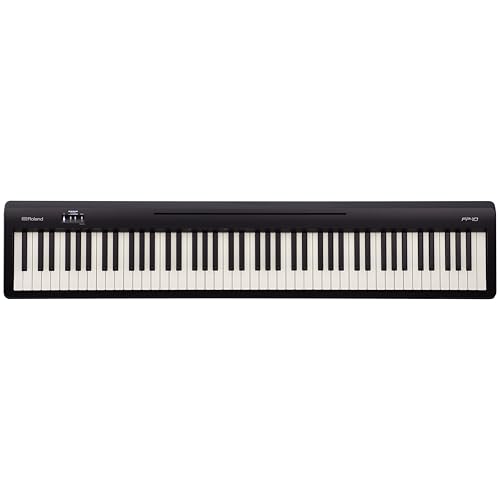
The FP-10 is Roland’s entry model, and Roland says its PHA-4 Standard keyboard offers hammer action, escapement and Ivory Feel white keys, the same keyboard it lists for the FP-30X. Polyphony is 96 voices, speakers are 6 W x 2, and there is a single headphone jack. Bluetooth is MIDI only, and Roland notes the feature may not be included depending on the country of purchase.
The body is 50-9/16 inches wide and 27 lb 13 oz (12.6 kg) with the music rest detached, and it ships with a pedal switch and music rest. The DP-10 damper pedal and KSCFP10 stand are optional. It ranks last because it has the lowest specs here, not because the keys are poor; for a beginner who mostly uses headphones it can be a sensible start. See the Roland FP-10 profile.
Recommendations by Use and Budget
Serious players and performers: The Roland FP-90X leads, and the Yamaha P-525 is the alternative if you prefer wooden keys and Yamaha’s two grand voices.
A permanent home piano with pedals built in: The Yamaha Arius YDP-165 for the stronger speakers and CFX sound, or the Roland RP107 for Bluetooth, the Roland Piano App and the lesson library.
Intermediate players who want a portable with extras: The Roland FP-60X for speakers and effects.
Beginners and returning players: The Roland FP-30X first, then the Yamaha P-225 if you prefer Yamaha’s sound and a lighter body.
Tight budget: The Yamaha P-145BT or the Roland FP-10, both entry-level. Pick the P-145BT if you want Bluetooth audio for lessons, and the FP-10 if you care most about key action.
Quiet apartment practice: Look for two headphone jacks, found on the FP-90X, FP-60X, FP-30X, RP107, P-525 and P-225.
If you can afford the top of the range and play seriously, start with the Roland FP-90X or the Yamaha P-525. If the piano will live in one room, the Yamaha Arius YDP-165 and the Roland RP107 give you pedals and a cabinet. In the middle, the Roland FP-60X and FP-30X offer the most for learners and returning players, while the Yamaha P-225 and P-145BT and the Roland FP-10 are the entry points. Whatever you choose, buy a sustain pedal, check Bluetooth availability for your unit and plan for a stand.
It depends on how you will use it. In this ranking the Roland FP-90X and Yamaha P-525 lead for serious players, the Roland FP-30X and Yamaha P-225 suit most learners who want a portable, and the Roland RP107 and Yamaha Arius YDP-165 suit families who want a permanent piano with built-in pedals.
Do I need a console digital piano or is a portable enough?
A portable (slab) piano is lighter and cheaper to move, but you usually add a stand and a pedal unit. A console such as the Roland RP107 or Yamaha Arius YDP-165 has the stand and three pedals built in, and weighs 82 to 93 lb, so it stays in one room.
Are weighted keys really necessary for learning piano?
Teachers generally recommend weighted, graded keys because the touch carries over to an acoustic piano. All nine pianos here have 88 weighted keys with heavier bass and lighter treble, according to Roland and Yamaha.
Do digital pianos have Bluetooth for lesson apps?
Most do. Roland lists Bluetooth audio and MIDI on the FP-90X, FP-60X, FP-30X and RP107, but only Bluetooth MIDI on the FP-10. Yamaha lists Bluetooth audio on the P-525, P-225 and P-145BT, and says availability varies by area. Yamaha's YDP-165 specification page lists no Bluetooth.
Can I practice quietly in an apartment?
Yes. Every model here has a headphone jack, and the Roland FP-90X, FP-60X, FP-30X, RP107 and Yamaha P-525 and P-225 list two, so a teacher or child can listen along. The Roland FP-10 and Yamaha P-145BT list one.
Do I need a sustain pedal?
Yes, for almost any piano music. The portables ship with a single pedal or footswitch, and a three-pedal unit is optional. The two consoles include three pedals, with half-pedaling on the damper.