We earn a commission if you buy through our links, at no extra cost to you.
Best Digital Piano for Adult Beginners: A Buyer's Guide
Starting piano as an adult? Here is what to check: weighted keys, pedals, apps, headphones for apartments and USB for a computer, plus models that fit.
At a glance
Adult beginners should start with 88 weighted keys, a sustain pedal and a headphone jack. The Roland RP107 is a home console with three pedals and lesson songs. The Roland FP-30X and the Yamaha P-225 are portable options with Bluetooth and app support.
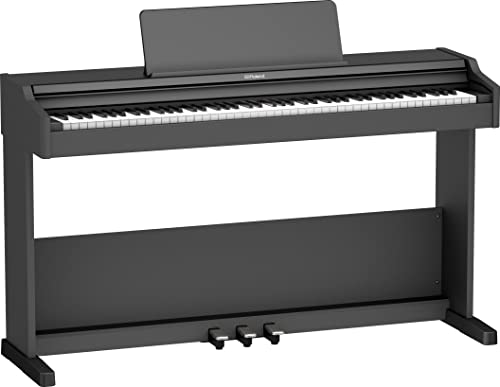
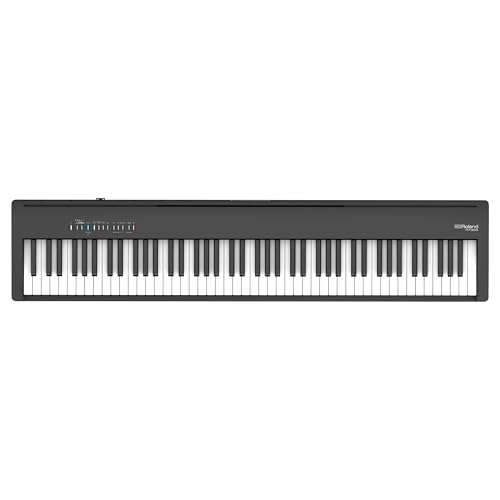
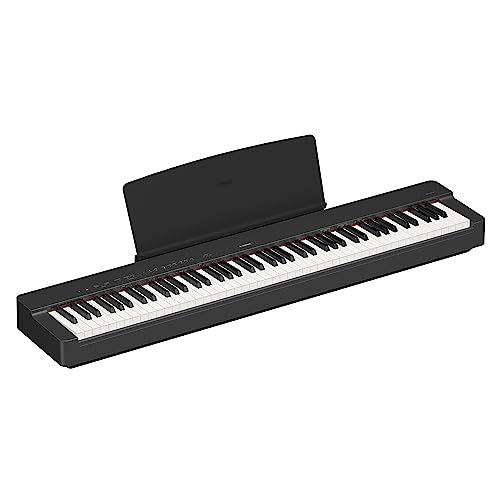
An adult starting piano has different problems from a child. You probably have a smaller space, shorter and less predictable practice windows, and a strong wish to sound decent quickly. A digital piano can handle all of that if you choose it for the right reasons. This guide covers weighted keys, pedals, apps, apartment practice and computer connections, then picks models from our lineup. For the whole field, see our best digital pianos of 2026 comparison.
We write from the manufacturers’ published specifications and our own comparison of them, not from measurements of our own. When a company makes a claim, we attribute it.
Start With the Keys
88 keys, weighted. A full-size keyboard covers all of the notes in a piano book, and weighted keys have a hammer mechanism that resists your fingers the way an acoustic piano does. Practicing on lighter, spring-loaded keys is easier at first, but the difference shows up the first time you sit at a real piano.
Graded hammer action. In a “graded” action the low keys feel heavier than the high keys. Roland’s PHA-4 Standard keyboard, used in the FP-30X and RP107, and Yamaha’s GHC and GH3 actions are all graded, according to the makers.
Escapement. Roland says the PHA-4 Standard has an escapement that reproduces the small notch you feel when a key is pressed slowly on a grand piano. It is a refinement, not a requirement for a beginner.
You do not need a wooden-key action to learn well. Wood keys, such as the ones Yamaha lists for the P-525, are for players who care about finer touch, and our advanced players guide covers them.
Pedals, Bench and Setup
Pedals. Most beginner music uses only the sustain (damper) pedal. The portable pianos here come with a basic pedal switch or footswitch, and a proper pedal or a three-pedal unit is a separate purchase. The RP107 and YDP-165 consoles have three pedals built into the cabinet.
Bench height. Sit so that your forearms are roughly level with the keys, your feet are flat on the floor or on a footrest, and your wrists are relaxed. An adjustable bench makes that easy. A dining chair is usually the wrong height for long practice, so check whether a bench comes with your piano before you buy.
Stand. A portable piano on a desk is fine if the desk is sturdy, but a purpose-built stand puts the keys at a better height. Check the widths on our profiles: the FP-30X is about 51 inches wide and the P-225 is about 52 inches.
Apps and Lessons
Apps can make early practice less lonely. Roland’s Piano App, which Roland lists for the FP-30X and RP107, includes an activity log with goals, flash card games and rhythm exercises, and a program for learning pieces, according to Roland. Yamaha says its Smart Pianist app controls the piano from a phone or tablet and includes PDF scores of 303 classical pieces. App support can end, so treat apps as a bonus rather than the reason to buy.
If you plan to take lessons, a teacher may have a preference about keys and pedals. Ask before you buy. Twin piano mode, which Roland lists on the FP-30X and RP107, splits the keyboard so a teacher and student can play in the same range side by side, which is handy for lessons at home.
Apartment Practice With Headphones
Headphones are the apartment player’s best friend. Every model in this guide has at least one headphone jack, and the FP-30X, RP107 and P-225 each list two, so a partner or teacher can listen along.
Roland describes the PHA-4 Standard action as quiet, which matters in a building with thin floors. Even so, keys thump against their stops, and a hard floor carries sound. A rug or a mat under the stand or bench helps. Keep speaker volume low in the evening, and use headphones for late sessions. Our kids guide has more on family practice habits.
USB and Connecting to a Computer
Connecting a digital piano to a computer is a common question, and the answer is usually one USB cable.
- Roland FP-30X: USB audio/MIDI to a computer, according to Roland, plus Bluetooth MIDI for apps such as GarageBand.
- Roland RP107: a USB Type B computer port and a USB memory port, plus Bluetooth audio and MIDI.
- Yamaha P-225: USB to HOST for MIDI and audio, per Yamaha’s store page, plus Bluetooth audio.
- Roland FP-10: a USB computer port and Bluetooth MIDI, but no Bluetooth audio.
MIDI sends which keys you press to notation or learning software. Audio lets you record the piano sound or play a computer’s audio through the piano. Check that your computer’s operating system and software support the piano’s USB connection before you buy.
Roland RP107: A Home Console for Lessons
A slim upright-style cabinet with three built-in pedals, the Roland Piano App and 287 lesson pieces among its songs.
Roland describes the RP107 as built for a family’s first piano. It has the PHA-4 Standard keyboard, Bluetooth audio and MIDI, a library of 377 songs and two headphone jacks. At 82.0 lb (37.0 kg) it stays put once set up, and it needs wall space about 54 inches wide. Speakers are rated at 8 W x 2, so it is not meant for loud playing. See our RP107 profile for the full specifications.
Roland FP-30X: Portable and Room to Grow
The PHA-4 Standard keys, USB audio/MIDI, Bluetooth and two headphone jacks, in a piano one adult can move.
The FP-30X offers 256-voice polyphony and more tones through the Roland Piano App, according to Roland. It weighs 32 lb 11 oz (14.8 kg) with the music rest, and Roland lists a desktop sound setting for use on a table. If you want to keep learning without buying again, this is a well-rounded pick. Read the FP-30X profile for details.
Yamaha P-225: Compact With Bluetooth Audio
A compact 88-key piano with Yamaha's CFX sound, two headphone jacks, Bluetooth audio and Smart Pianist support.
Yamaha lists the P-225 at 25 lb 6 oz (11.5 kg) and 10-11/16 inches deep, one of the slimmest pianos in our lineup. It has the GHC keyboard, 192-note polyphony and an AUX output. See the P-225 profile for the full picture.
Budget Tiers
Our lineup breaks into a few rough tiers, using the manufacturers’ own positioning and no price figures.
- Entry-level: the Roland FP-10 and the Yamaha P-145BT. The FP-10 has the same PHA-4 Standard keyboard as the FP-30X. The P-145BT, at 24 lb 8 oz (11.1 kg) per Yamaha’s shop page, is the simplest Yamaha and has one headphone jack.
- Mid-range: the FP-30X, P-225 and RP107 above.
- Premium: the FP-60X, FP-90X, P-525 and YDP-165, which add better sound systems, wood key structures or furniture cabinets. Most beginners can wait on these.
Questions to Ask Before You Buy
- Will you mostly use headphones? Check the jack count.
- Do you need to move it? Compare weights, and note that a console stays where you put it.
- Do you want a bench? Confirm the listing’s contents.
- Will you use a computer? Check the ports above.
- Do you want to grow into the piano? Look at polyphony and the sound engine.
Bottom Line
For an adult beginner, choose weighted 88 keys, a sustain pedal, a quiet practice option and the connections you will use. The RP107 is our pick if you want a piece of furniture with pedals, and the FP-30X and P-225 are the portable choices. For every model side by side, see our best digital pianos of 2026 comparison.
Sources
Frequently asked questions
Do adult beginners need weighted keys?
It is the safest choice. Weighted, hammer-action keys feel like an acoustic piano, so what you learn at home carries over to a lesson room or a friend's piano. All models in this guide list 88 weighted keys.
Which apps work with a digital piano?
Roland lists the Roland Piano App for the FP-30X and RP107, and Yamaha lists Smart Pianist for the P-225. Both connect to a phone or tablet. Bluetooth MIDI also works with third-party apps such as GarageBand, according to Roland.
Can I connect a digital piano to a computer?
Yes. Roland lists USB audio/MIDI on the FP-30X and a USB computer port on the RP107, and Yamaha lists USB to HOST for MIDI and audio on the P-225. A single USB cable is usually all you need for notation software or a recording program.
How do I practice in an apartment?
Use headphones for most sessions. Every model here has a headphone jack, and a weighted action is relatively quiet. Speakers will still carry through shared walls, so keep volume low and avoid late hours.
Do I need three pedals?
Most beginner music uses only the sustain pedal. The soft and sostenuto pedals appear in later repertoire. A console such as the RP107 includes all three, and a portable piano can add a three-pedal unit later.
Should I take lessons or learn from an app?
That is a personal choice. Apps give structure and a practice log, and a teacher gives feedback on posture and technique. Many adults use both, and a weighted piano works either way.