We earn a commission if you buy through our links, at no extra cost to you.
Best Digital Piano for Kids: What to Check First
Buying a digital piano for a child? Check weighted 88 keys, pedals, headphones, bench height and apps, then see which of our models fit a young player.
At a glance
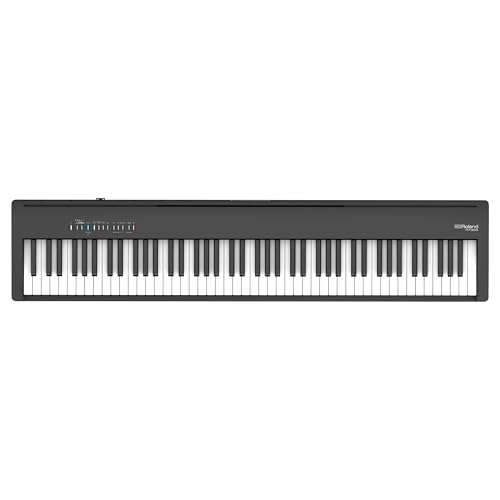
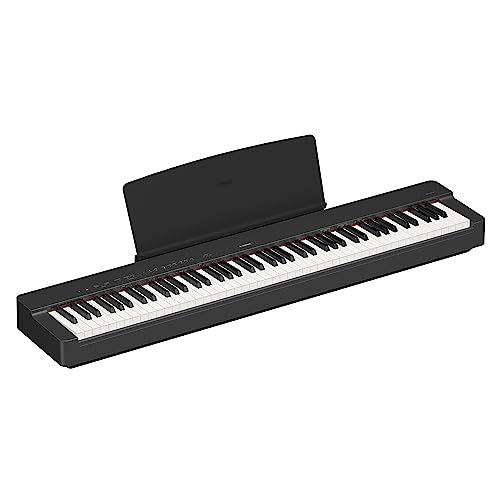
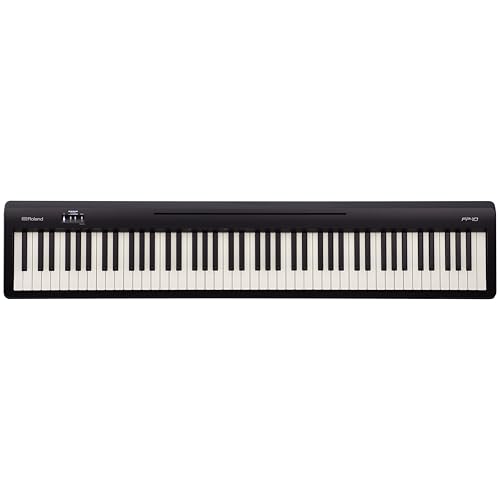
For a child, look for 88 weighted keys, a sustain pedal and a headphone jack. The Roland FP-30X adds a second headphone jack for a teacher. The Yamaha P-225 is lighter, with two headphone jacks too. The Roland FP-10 is the simplest starter.
Shopping for a child is mostly shopping for the right keys and the right setup. A toy-style keyboard with 61 small keys can be fun, but lessons usually move toward a full piano, and the gap between the two shows up quickly. This guide covers what to check on a digital piano for a young player, then picks models from our lineup. For the whole field, see our best digital pianos of 2026 comparison.
We write from the manufacturers’ published specifications and our own comparison of them, not from measurements of our own. We do not make claims about what a child will learn or how fast, and we do not recommend a specific age. Check with your child’s teacher, and read the manufacturer’s page for any age or safety guidance.
Ask the Teacher First
Before you choose a model, ask your child’s piano teacher what the studio expects. Policies differ. Some teachers ask for weighted keys and a sustain pedal, some accept a lighter action for the first few months, and some want an acoustic piano or a specific action. A short email with the model you are considering can save you a return.
If there is no teacher yet, the safe plan is a full-size, 88-key instrument with weighted keys and a pedal. Every model below meets that description, and it is the setup most lesson books assume.
What Matters on a Digital Piano for Kids
88 weighted keys. A full keyboard covers every note in the lesson books and recital pieces. “Weighted” means each key has a hammer mechanism that resists the finger, which is what a piano does. Roland’s PHA-4 Standard keyboard and Yamaha’s GHC keyboard both use a graded hammer action, where the low keys feel heavier than the high keys.
A sustain pedal that works. Beginner pieces start using the damper pedal early. The pedal switch in the box with the portable models is basic, so check whether a proper pedal is worth adding. Roland lists the DP-10 damper pedal for the FP-30X and FP-10 and says the FP-10’s version supports half-pedaling. Yamaha’s P-225 pairs with the LP-1 three-pedal unit as an option.
Headphones. A child who practices every day will use headphones a lot. A second headphone jack lets a parent or teacher listen too. Roland lists two jacks on the FP-30X, and Yamaha lists two on the P-225, while the FP-10 has one.
Speaker volume and noise. Built-in speakers are fine for a bedroom. If the piano sits near a shared wall, headphones keep practice time from becoming a family problem.
A sturdy stand. A desk or a wobbly folding stand works against good technique and can shake during energetic playing. A purpose-built stand or a console cabinet holds the keyboard at a steady height.
Bench and seat height. A child should sit with feet supported and forearms roughly level with the keys. An adjustable bench makes that possible, and a footstool can do the job for a younger child whose feet do not reach the floor. Ask the teacher to check the setup once it is in the house.
Apps. Piano apps can add scores, practice logs and play-along lessons. They are a bonus, not a substitute for a teacher. Check that the app works with your phone or tablet, and note that Roland says app support may end without notice.
Computer and tablet connections. USB and Bluetooth MIDI let a piano talk to apps and notation software, and some models stream audio through their speakers. If your child will use a computer or tablet, check which ports the model lists. Our adult beginner guide goes into the setup in more detail.
Roland FP-30X: A Good Match for a Growing Player
An 88-key PHA-4 Standard keyboard, two headphone jacks and Roland Piano App support, in a piano a family can keep for years.
The FP-30X uses the same keyboard Roland puts in its FP-60X, according to Roland, with escapement and Ivory Feel keytops. It has two headphone jacks, so a parent or teacher can listen along, plus a twin piano mode that splits the keyboard so a student and teacher can play in the same range side by side. Roland lists a weight of 32 lb 11 oz (14.8 kg) with the music rest, so one adult can move it. Our FP-30X profile has the full specifications.
Yamaha P-225: Light and Quiet
A compact weighted-key piano with two headphone jacks, Bluetooth audio and Smart Pianist support, at about 25 lb.
Yamaha lists the P-225 at 25 lb 6 oz (11.5 kg) and about 10-11/16 inches deep, which makes it easy to put on a narrow desk or a stand in a small room. The GHC keyboard is a graded hammer action, and Yamaha lists two headphone jacks, a recorder and rhythms. See the P-225 profile for details.
Roland FP-10: The Simplest Starter
Roland's entry model, with the same PHA-4 Standard keyboard as the FP-30X, at a lower budget tier.
According to Roland, the FP-10 uses the same PHA-4 Standard keyboard as the FP-30X, in the smallest body in the family at 27 lb 13 oz (12.6 kg) with the music rest detached. The trade-offs are 96-voice polyphony, 6 W x 2 speakers and one headphone jack, and Roland lists Bluetooth MIDI only, with no Bluetooth audio. If your child will mostly practice on headphones and you want the lowest cost of entry, it is a sensible start. Read the FP-10 profile before you decide.
If You Want a Piano That Stays Put
A console piano has the keys, speakers and three pedals in one cabinet, which means no stand to assemble and no pedal to slide across the floor. The Roland RP107 lists 82.0 lb (37.0 kg), a PHA-4 Standard keyboard, dual headphone jacks, Twin Piano mode and 287 lesson pieces among its 377 internal songs, according to Roland. The Yamaha Arius YDP-165 lists 92 lb 10 oz (42.0 kg) and three pedals with a half-pedal function. Both are furniture, so measure the wall first, and confirm whether the listing includes a bench.
Setting Up a Practice Space
Put the piano where practice is easy. A corner with a lamp, a stable surface and a spot for the lesson book works better than a keyboard in a closet. Keep the music rest at eye level, and keep the bench and pedals where your child can reach them without stretching.
Treat the headphones as a tool for both of you. They let a child practice before school or after dinner without reopening the volume debate, and they let a parent hear what is going on if a second jack is available.
Questions to Ask Before You Buy
- Has the teacher said what they need? Weighted keys and a sustain pedal are common requests, but ask.
- Will a parent or teacher need to listen with headphones? Choose two jacks.
- Where will it live? A slab piano needs a stand, and a console needs wall space and a lift.
- Is the pedal good enough? Plan to upgrade a basic switch once lessons require the pedal.
- Do you want a bench included? Check the listing’s contents.
Bottom Line
A good first piano for a child has 88 weighted keys, a real sustain pedal and a way to practice quietly. The Roland FP-30X is the balanced pick, the Yamaha P-225 is the light and compact one, and the Roland FP-10 is the simplest start. For a permanent piano, look at the RP107 or YDP-165 consoles. For every model side by side, see our best digital pianos of 2026 comparison.
Sources
Frequently asked questions
Does a child need 88 keys?
Piano teachers often ask for a full 88-key instrument with weighted keys, since lesson books and recital pieces use the whole range. Ask your child's teacher what the studio requires before you buy. Every model in this guide has 88 weighted keys.
Is a keyboard with lighter, springy keys good enough?
Lighter keys feel different from a piano, and a child who practices on them may find an acoustic piano at a lesson or recital heavier. A weighted hammer action, such as Roland's PHA-4 Standard or Yamaha's GHC, is closer to a piano. Your teacher can tell you what they prefer.
Can a child practice quietly with a digital piano?
Yes. Every model in this guide has a headphone jack, and the Roland FP-30X and Yamaha P-225 list two, so a parent or teacher can listen along privately. Playing through the built-in speakers will still be audible in the next room.
Do I need a stand and a pedal?
You need something sturdy and a sustain pedal. A basic pedal switch or footswitch comes with these portable models, but a stand and a three-pedal unit are separate purchases. A console such as the Roland RP107 includes three pedals in the cabinet.
Can my child use apps with these pianos?
Roland lists the Roland Piano App for the FP-30X and RP107, and Yamaha lists the Smart Pianist app for the P-225. Both need a phone or tablet, connected over Bluetooth or USB. Check which features each app offers before you rely on it.
Will my child outgrow a digital piano?
A weighted 88-key piano has no size to outgrow. The things that change are the seat and pedal height, which you can adjust, and the player's need for a better action or more polyphony. Starter and mid-range models both fit most lesson plans.